Developing an innovative idea is only part of the journey. How do stakeholders respond to it? Does it meet consumers’ needs? And what does it take for the idea to become viable and grow beyond its original setting?
These are some of the questions being explored in Work Package 5 (WP5) of InnOFoodLabs, which started in September 2026. Led by UNIVPM, this work focuses on seven selected Living Lab innovations, looking at them from three connected perspectives: stakeholder views, consumer acceptance and business development.
Listening to stakeholders
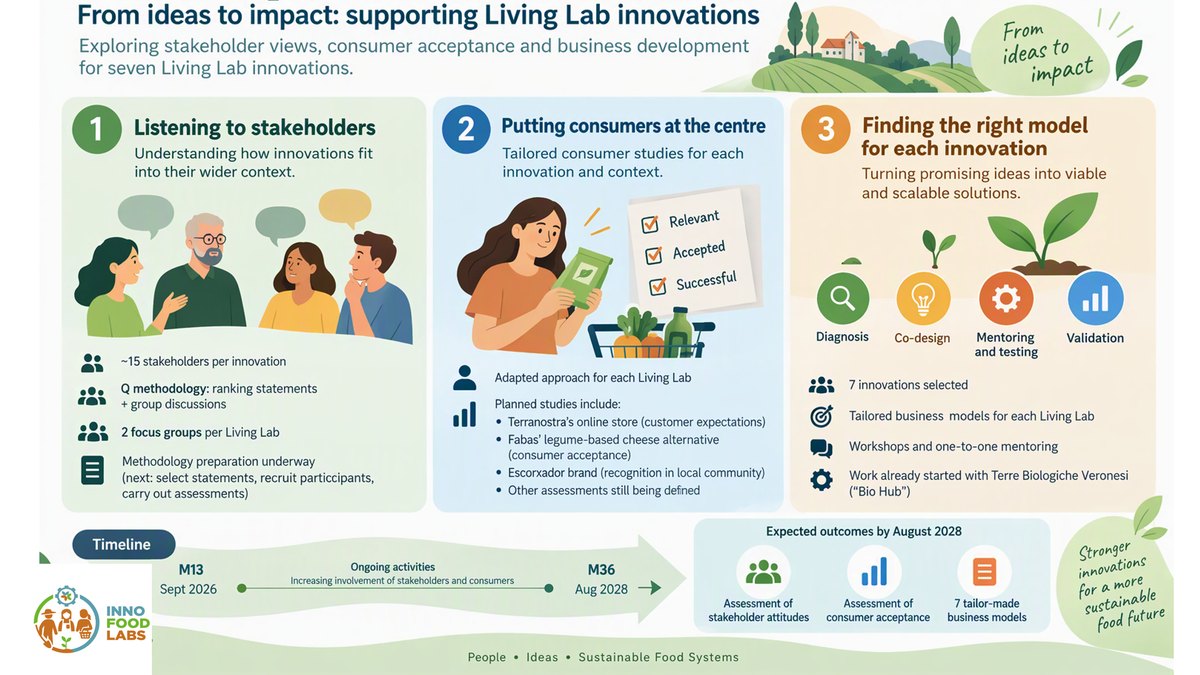
Understanding how an innovation fits into its wider context means listening to the people who may be involved in, affected by or able to support its development.
For each of the seven selected innovations, around 15 stakeholders connected to the sector will be invited to share their perspectives. The work will use Q methodology, which combines the ranking of statements with group discussions to reveal different points of view and areas of agreement around an innovation. Two focus groups are planned for each case.
The methodology is now being prepared. The next steps include developing and selecting the statements to be used in the discussions, recruiting participants and carrying out the assessments with the Living Labs.
Putting consumers at the centre
What consumers think is another important piece of the picture. Rather than using the same approach for every Living Lab, the consumer studies are adapted to each innovation and its particular context. This tailored approach helps the Living Labs develop solutions that are relevant to consumers, more likely to be accepted, and ultimately successful.
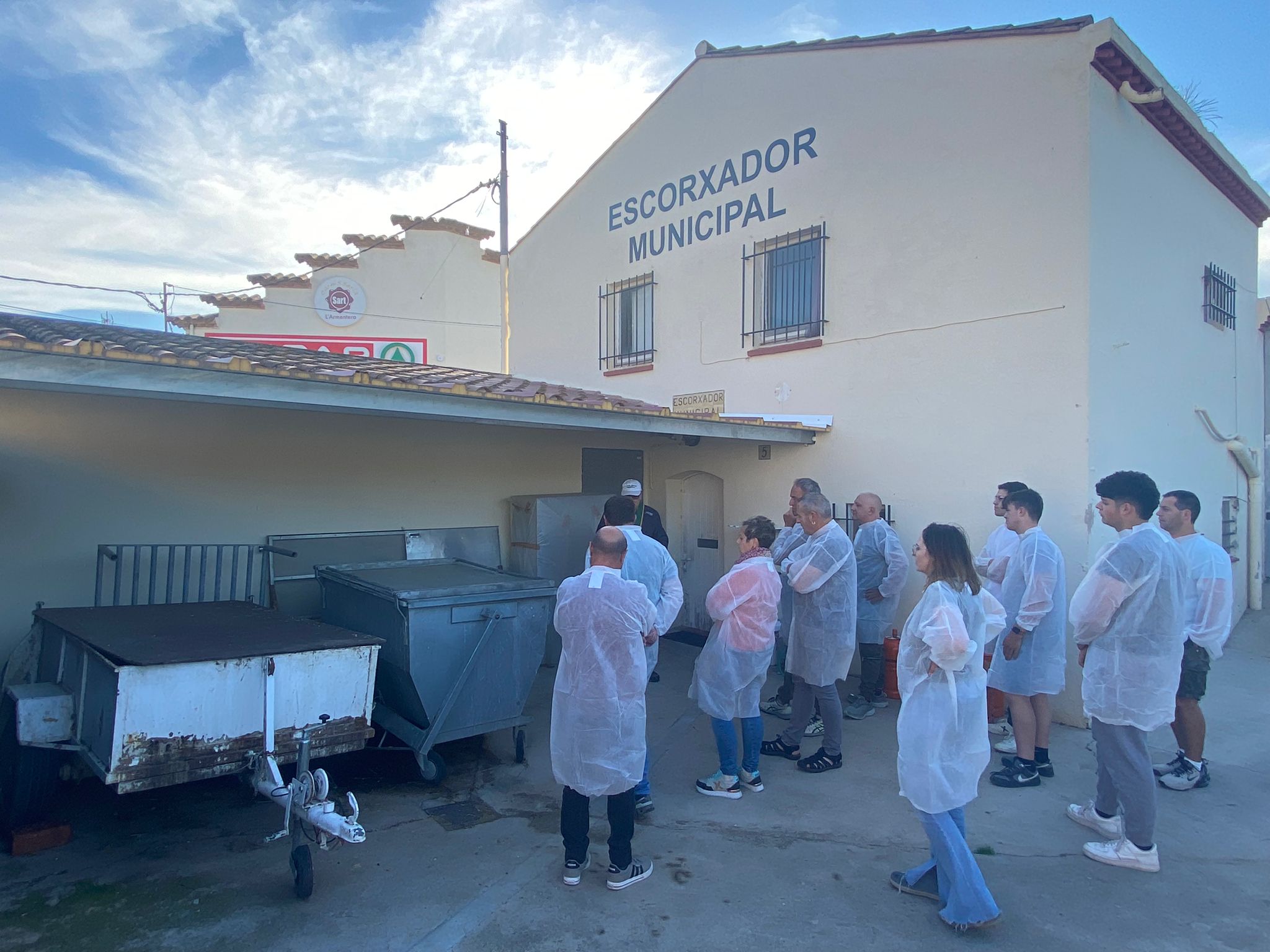
The questions will therefore vary from one Living Lab to another. Planned studies include exploring expectations around Terranostra’s online store, consumer acceptance of Fabas’ legume-based cheese alternative, and recognition of the Escorxador brand within its local community. Assessments for other participating Living Labs are still being defined.
Finding the right model for each innovation
The third part of the work focuses on a practical question: how can promising Living Lab innovations develop into viable models?
Seven innovations have been selected for this process. Rather than applying a single formula, each Living Lab will work on a model tailored to its own innovation, needs and context. The process moves through four stages: diagnosis, co-design, mentoring and testing, and validation. Workshops and one-to-one mentoring will help the Living Labs explore what works, identify challenges and refine their approach.
This work has already started with Terre Biologiche Veronesi, where the team is working on a “Bio Hub” innovation focused on developing and activating a local network that connects organic producers with restaurants and other food professionals.
What comes next?
WP5 is still at an early stage. Over the coming months, the work will increasingly involve stakeholders and consumers, while the selected Living Labs continue developing and testing their business models.
By August 2028, the work is expected to bring together three main outcomes: an assessment of stakeholder attitudes towards selected innovations, an assessment of consumer acceptance, and seven tailor-made business models. These business models will also contribute to later InnOFoodLabs work exploring the potential to scale out the innovations.
Together, this will give the Living Labs a clearer picture of how their innovations are perceived, where their potential lies and what could help them move forward.