This innovation tackles the mismatch between whole-animal supply and selective demand by building practical capacities in professional kitchens. Chefs often lack experience with lesser-known cuts and menu planning aligned with carcass availability, which limits full utilisation and reduces economic efficiency.
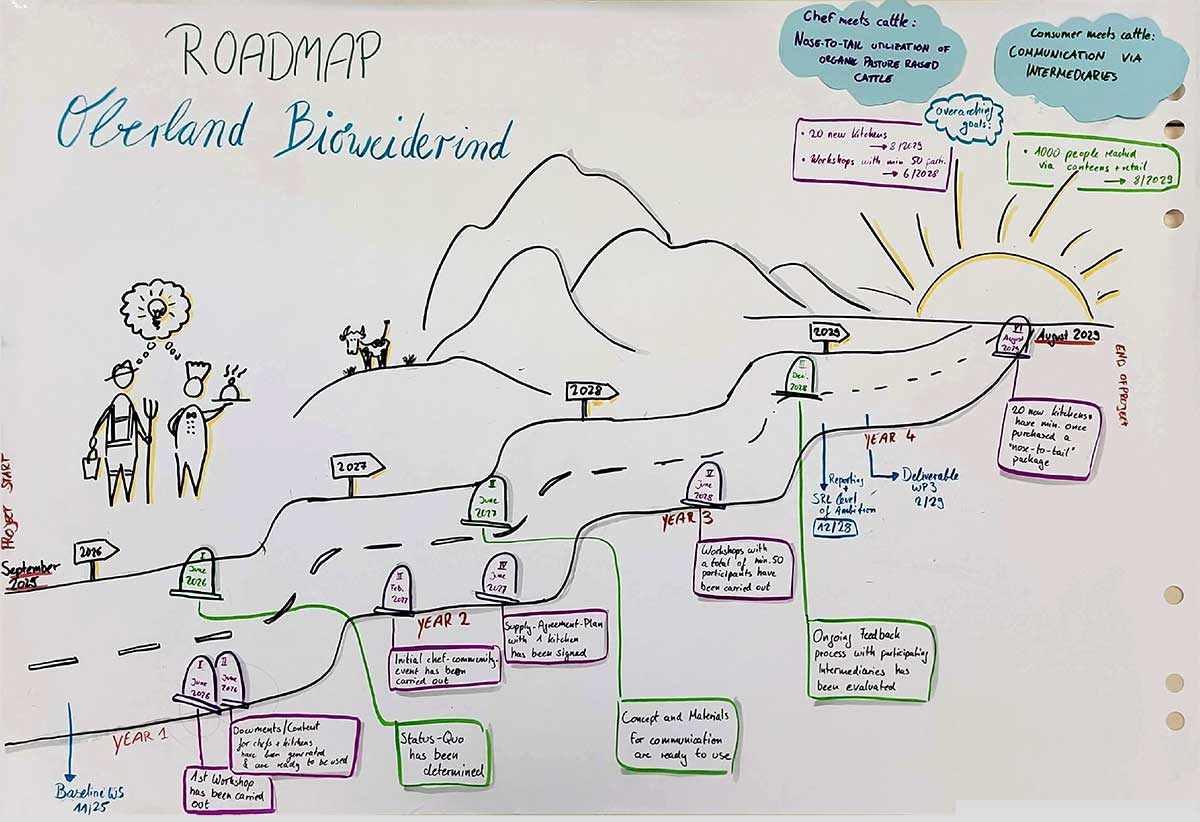
From 2026 onwards, the Living Lab will implement a structured training and exchange programme. Workshops, study visits and peer learning formats will equip at least 50 chefs with recipes, preparation techniques and calculation tools. Supporting materials (recipes, cut guides, pricing tools) and a growing chef network will ensure continuity beyond the project duration.
In parallel, supply agreements with selected kitchens will improve planning and align demand with availability. The expected result is a measurable increase in the use of underutilised cuts, reducing dependence on premium segments. Since key cuts already cover most production costs, improved whole-carcass utilisation directly enhances margins and stabilises farmer income.
Overall, the innovation creates a practical pathway for kitchens to combine economic performance with sustainability, while strengthening regional value creation.